Tag: Digital humanities

  • Research

    Research

    Dr Louise Curham is an archivist, media artist and researcher based in Canberra. She is an online lecturer in Curtin University’s iSchool. Louise uses art and archives to explore themes that flow from old media, ranging from digitisation to the impact of algorithm-based technology on citizens.

    I finalised my PhD in the Centre for Creative & Cultural Research at the University of Canberra, Faculty of Arts & Design in 2021. You can read a blog post on my pre-submission seminar here. You can find my MFA thesis and other things on Academia. I write an occasional blog on things archives here Rambunctious Archives.

    Talks and presentations

    Curham L, Hanisch J. (2014). Towards improved metrics for information management. InForum, Records and Information Management Professionals Australasia conference, Adelaide.

    Ihlein L & Curham L. (2015). Tending the Archive. Australian Society of Archivists conference, Hobart ASA talk 2015 ‘Tending the Archive’.

    Curham, L. (2015). Tending the Archive. Talk to National Archives of Australia, Government Information Assurance and Policy branch professional update seminar.

    Ihlein L & Curham L. (2015). Panel convenors ‘Re-enactment / Repetition / Reiteration / Re-performance as embodied research’, Art Association of Australia & NZ (AAANZ) Conference, QAGOMA, Brisbane.

    Curham L. (2016). Tending the Archive. Australasian Association for the Digital Humanities conference, Hobart Digital Humanities talk 2016 ‘Tending the Archive’.

    Curham L. (2016). ‘Re-enactment practitioners’ chat’, convenor and presenter. Westspace, Melbourne.

    Curham L. (2016). The Filmmaker is Present. Australian Screen Production Education and Research Association conference ASPERA 2016.

    Curham L. (2016). Observing the Re-enactment. Scenes of the Real symposium, Department of Performance Studies, University of Sydney.

    Curham L. (2016). Expressive Instructions for Re-enactment. AAANZ conference ‘The Work of Art’, Canberra.

    Curham L and Jolly M. (2016). Convenors ‘In the Footsteps of Others’ panels for AAANZ conference ‘The Work of Art’, Canberra.

    Curham L. (2017). Tending the archive: ritual as preservation; enfolding preservation into use; and preservation as a community enabler through the case study of (Wo)Man With Mirror, a re-enactment of a 1970s artwork. ‘Shock of the New’, Australasian Institute for the Conservation of Cultural Materials joint SIG symposium, Melbourne.

    Curham, L. (2017). When the Record Performs. Australian Society of Archivists’ annual conference, Melbourne.

    Curham L. (2019). Creative Knowledge Management, PriceWaterhouseCoopers Festival of Creativity, Canberra.

    Curham L. (2019). Having Opinions in Digital Preservation, Australasia Preserves talks series, online.

    Curham L. (2019). The Wisdom Travels With the Object. ‘Archives in the Digital Age’ symposium for the launch of the Kaldor Digital Archives, Art Gallery of NSW.

    Publications

    Ihlein, L & Curham, L. (2015). ‘Reaching Through To the Object: Re-Enacting Malcolm Le Grice’s Horror Film 1’. Performance Matters 1 (1-2): 24–40.

    Curham L. (2016). ‘Caring for Live Art That Eludes Digital Preservation’. In Proceedings of the 13th International Conference on Digital Preservation, 266–67. Bern, Switzerland: Swiss National Library.

    Curham, L. (2017). ‘Performing Digital Multiple Perspectives on a Living Archive’. Archives and Manuscripts, 45(2), 167–169.

    Non-traditional research outputs

    Curham, L. (2015). dLux Media Arts Significance Assessment Report. Sydney: dLux Media Arts.

    Curham L. (2015). A film of one’s own [archive fever] solo exhibition. Canberra: PhotoAccess.

    Bullock O, Curham L, Florance C. (2016). Tracer. Performance for haiku, prepared screens and super 8 film. Canberra: You Are Here Festival.

    Cairncross B & Curham L. (2017). ‘The Parliament of Owls’, Underbelly Arts Festival, Sydney.

    Curham, L & Di Centa, D. (2018). In a Bone Way performance, Dance on the Edge season, Belconnen Arts Centre, Canberra.

    Curham L & Loo L. (2019). The Stand-in Lab exhibition. Canberra: PhotoAccess.

    Curham L & Griswold E. (2019) Dots and Loops Festival of New Music, Brisbane.

    Curham L & Cairncross B. (2019). In ‘Extra! Extra!’ organised by Lucas Ihlein, in the 50 Years of Kaldor Public Art Projects exhibition, Art Gallery of NSW.

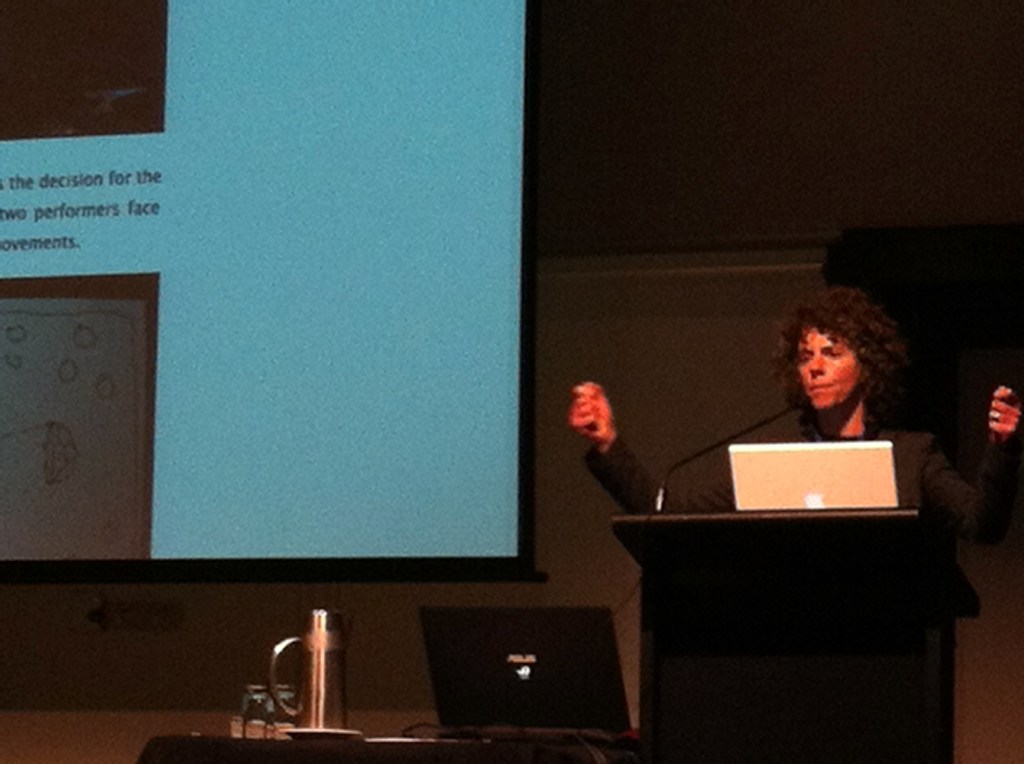
  • ‘Tending the archive’ talk for Australasian Association of Digital Humanities conference 2016

    ‘Tending the archive’ talk for Australasian Association of Digital Humanities conference 2016

    [The talk was intended to be accompanied by video documentation of the inaugural TLC performance of re-enactment (Wo)Man With Mirror in 2009 here https://vimeo.com/8855880].

    This short paper is an initial sketch exploring a possible shift in our mental map of how we care for things that are prone to disappearance, including the digital.

    My background attunes me to things prone to disappearance. It has two parts – one in the arts, specifically obsolete moving image, think hand made film made using obsolete techniques and equipment and as we shall, re-enactment of live art from the 1970s. The other part is in archives – in the past, I worked in film preservation, more recently on digital records of government, engineering them and appraising them and.

    I am currently part way through a PhD. Using a case study of resolutely analogue performance-dependent heritage, one way to caste my research is that it explores how we might re-think the preservation/access dilemma. By dilemma I mean that if we use things, we physically degrade them, and if we just preserve them without ever permitting a use for them, how do we justify keeping them? The field of conservation is predicated on this idea of ‘indefinite’ access. So in part, I am interested in looking again at this dilemma, inviting a re-reframing of archiving as a process of ‘tending’. In short, the tending idea puts use front and centre – through using things, we can maintain them and through embodied use, we can reinvigorate them.  This somewhat cryptic notion of ‘embodied use’ will become clear in the course of this paper.

    While my case (live art) is resolutely analogue, it can be caste as performance-dependent heritage along with heritage like motion picture film and digital records which rely on layers of technological performance to experience them. So this means my tending idea may resonate with dealing with digital stuff in general.

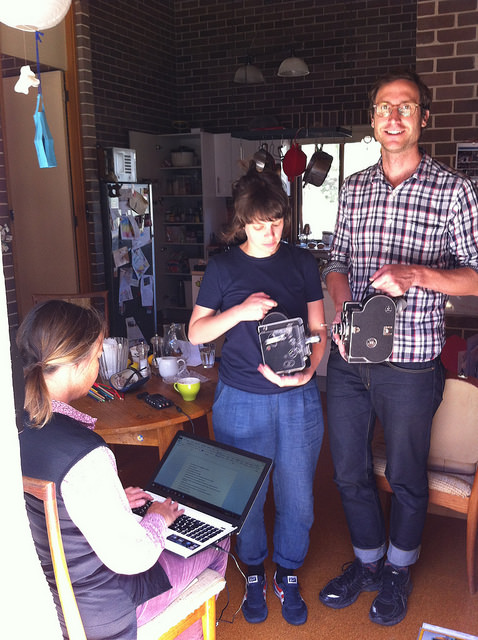
    The case study I will talk you through is drawn from my work in Teaching and Learning Cinema, an artist/archivist collaboration between me and artist Lucas Ihlein, drawing on my background in archives and experimental film and Lucas’ background in contemporary art. (more…)