Category: Gallery

  • Kambah

    A digital mapping project with the Kambah community 2020 –

    An exhibition in early 2023

    Testing participatory archiving – the case of Kambah bogan suburb

    Archivists have been working on Involving communities in selecting archives for a couple of decades, wanting to move away from being gatekeepers for collections. However, delivering on aspirations to actually build collections with communities has been elusive. There are great community archives in Australia, the Australian Queer Archives is a good example as is the ARI Remix project from Brisbane but for public collections, the goal of building and managing collections with communities is still recognised as a key challenge. 

    I am working with my community to learn what is important to them and to build a digital map of what I call atmospheres. This map forms a collection that has a potential to gather our knowledge, images and stories that the community values and to find ways to keep them for the long-term. 

    There are other innovations in this project – it uses unusual categories to prompt residents to reflect in new ways on what’s important t them, amospheres of my suburb: places to meander, places to imagine, places to go wild, for example. The digital map generates what I’ve been thinking of as a ‘performance of place’ – this is locative media for the mobile phone. Entries can be hidden, or revealed only at an approximate distances or made completely visible and browsable on a desktop as well as the mobile. While the potential of locative media for heritage collections  is well understood, the practice is still immature, I’m digging into that. You can check out the digital map although it is still in its infancy.

    A gallery visitor encounters a series of pinhole camera photographic prints, connected to the map. My suburb is famous on the internet as one of the biggest bogan suburbs in Australia. What is bogan and what does that look like? By using old media, things are slowed down, it takes time to make to take and make the image and errors show up. The pinhole transposes things, upside down and back to front, causing the viewer to look more closely to recognise the image in the first place. And that’s the point, to get people to look more closely at the very familiar, appreciating it anew. 

    Here’s the digital scrapbook https://kambahpeoplesmap.tumblr.com/

    And here’s the digital map https://cgeomap.eu/urambi/

  • (Wo)Man With Mirror

    3988954165_4aa92fae3b_oIhlein, L. M. & Curham, L. (Wo)man with Mirror. Artwork featured in the exhibition “Hollow in the Paper”, Hobart, CAST Gallery, 13 July to 18 August, 2013. Published in the flip book Hollow in the Paper curated by Bec Stevens. ISBN 0947335897.

    2009: ‘Imprint’ at Artspace, Sydney, exhibition 3 July to 1 August.

    2012: MCA, Sydney. Event 2 Nov.

    2013: Parlour performance event, 13 Rooms, Kaldor Contemporary Art Projects. Event April 19.

    2013: Critical Path, Sydney. Artists’ Salon: Moving Image. Event 2 May.

    2013: Unconscious Archives, Apiary Studios, London. Event 18 June.

    (Wo)man With Mirror

  • Propositions and Game Plans

    Propositions and Game Plans

    Curham, L. (2008). Untitled#1-3 in ‘Propositions & Game Plans’, Robert Hughes Gallery, Melbourne International Arts Festival.

    Note – gallery renamed 45 Downstairs at time of exhibition.

  • Old Things Are New Again

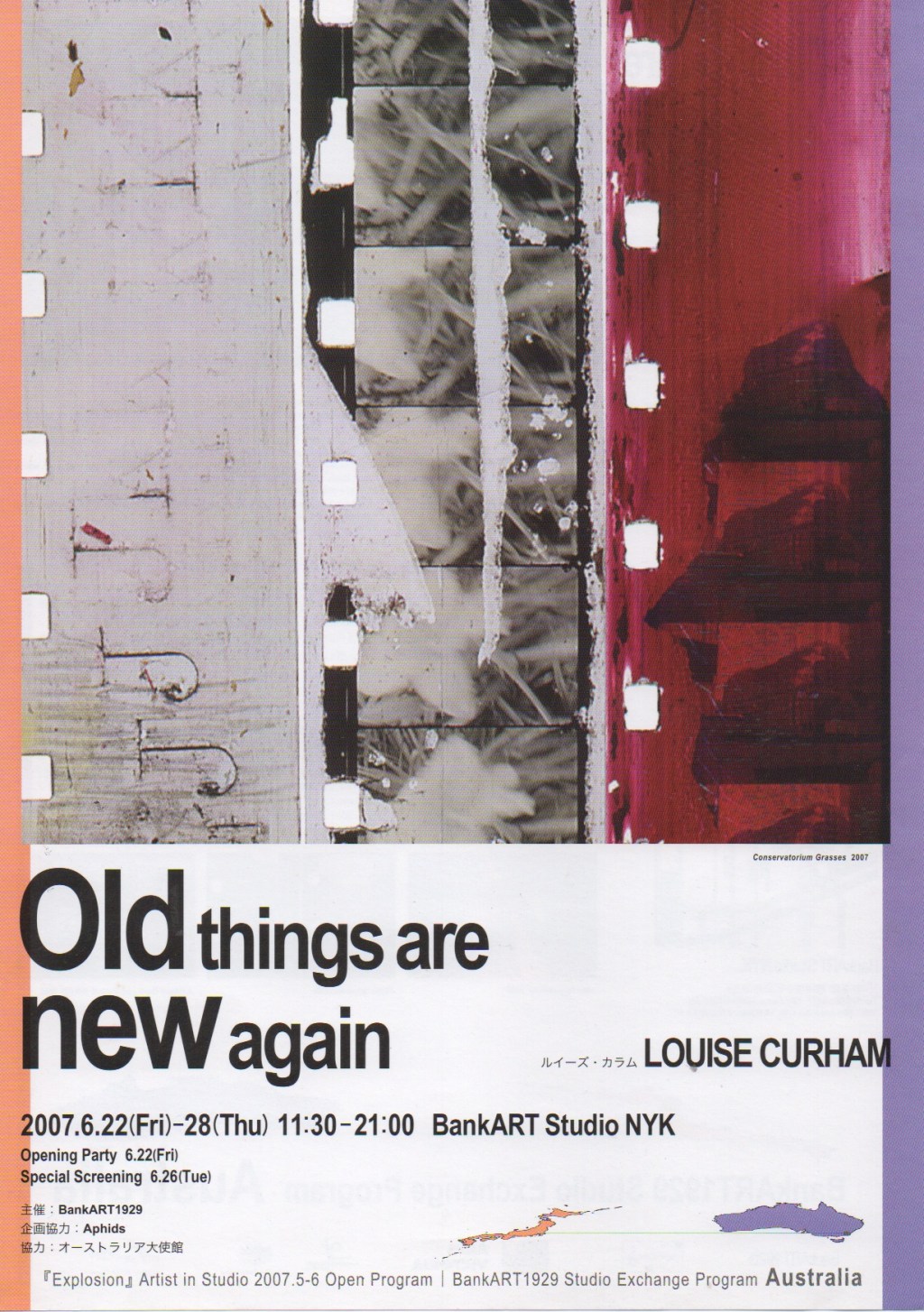
    Old Things Are New Again

    Curham, L (artist). (2007). Old things are new again. [Exhibition]. Yokohama, Japan: BankArt 1929.

    Flickr album here.


  • Long Film for Ambient Light

    Long Film for Ambient Light

    Curham, L & Ihlein, M. (2007). Re-enactment of ‘Long Film for Ambient Light’ [installation]. Sydney: Performance Space

    As part of residency at Performance Space.

    In 2007 Teaching and Learning Cinema (Lucas Ihlein and me) restaged/re-enacted/ re-did Anthony McCall’s piece from 1975 at Performance Space at Carriageworks – TLC website has all the details here 

    435902069_f682b7ee17

  • A film of one’s own

    A film of one’s own

    A Film of One’s Own [Archive Fever] (2015), solo exhibition, PhotoAccess Canberra, Nov.

    Some words about this exhibition from the opening talk:

    The title of this exhibition is important. It references Virginia Woolf’s A room of one’s own and Jacques Derrida’s Archive fever: a Freudian impression.

    Archiving one’s self

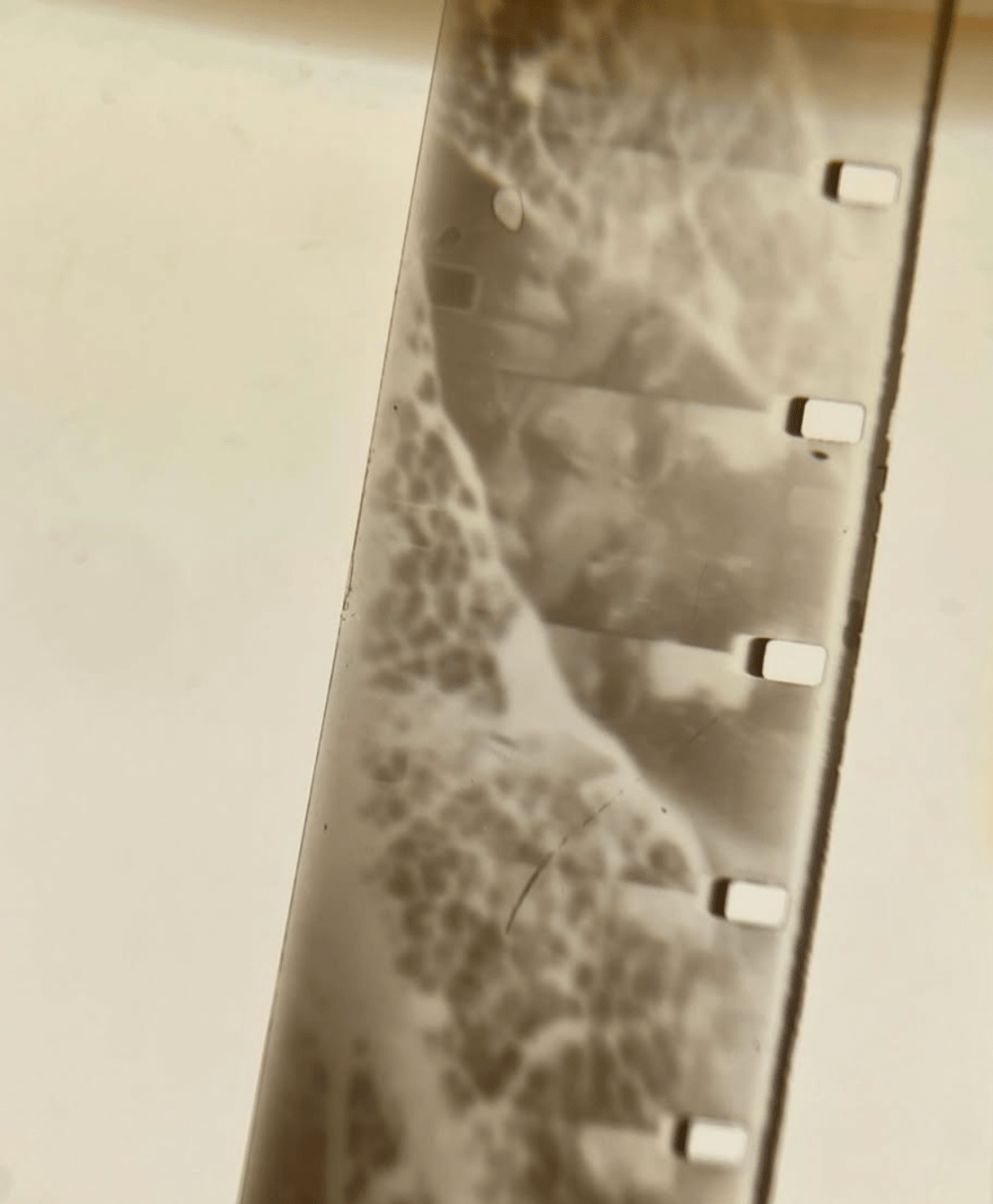
    The work in this show all comes from my abstract super 8 films literally sticky-taped into an old 16mm narrative film of mine. I cut out the middle of the 16mm film and taped the super 8 into the gap.

    image
    image

    My idea was to ‘archive myself’ by putting all my super 8 films inside this 16mm film. This connects with the [Archive fever] in the title. Jacques Derrida gave a talk at the Freud Museum in London in 1994, translated by Eric Prenowitz into English as ‘Archive Fever: A Freudian Impression’, a text that has reverberated so widely for anyone dealing with culture and the past. A resonance for me from Derrida’s piece is his reading of the psychoanalytic process as one of interrogating one’s own archive. The article is much better known for the way it lays out Derrida’s thoughts about the formation of ‘the archive’ and its construction of power. For me he sets these ideas down in service of his reading of the psychoanalytic process as mining one’s own archive and the consequent perils and discoveries.

    So in this work I double archive myself, nesting one era of work inside another. What I learnt from this is that Derrida is right about the hiving off that happens when we consign something to the archive. I had not realised before how dramatic the act of archiving can be.

    The physical strips of super 8 that are inside the 16mm can not behave as they did. I can’t run them through the projector or put them on the scanner as I could before. But I do have access to them in a different, ‘archived’ way and that is all the digital surrogates you see in this exhibition – stills made from digital scans of the prints and a 4 image video work of the new 16mm strip that contains the super 8. The series of 4 single prints are the super 8 strips before they were archived into the 16mm. Those can’t now be recreated (the digital file remains of course) like that, the films are now taped in, archived.

    image

    A film of one’s own

    On a simple level, this work archives my process as a maker and my shift from narrative to abstraction. The 16mm film is my 1993 student film. At that point I wanted to be Jane Campion. My practice evolved to super 8 and these quickly became almost film-less – as the digital prints show, they are made from paper, trace paper and shards of celluloid taped together.

    The shift to abstraction came from lots of places.

    Virginia Woolf comes in here. What I take from her text is that creativity needs resources. That still resonates powerfully for me. Resources seem to have gotten tighter and tighter for cultural production in general and my own  resources never match what I’d like to do – resources in terms of time, space, things and because I collaborate a lot, access to my peers and colleagues is also increasingly restricted – they can’t spare time et al.

    In a way, I have built my response to this limitation into my practice. Traditional film making is excruciatingly resource intensive. My response to this has been to construct a practice that is ‘poor’ – my mantra has been to work with what I have in a very literal way. It’s a ‘making do’ algorithm that is quite neatly mirrored in my use of analogue film – super 8 and 16mm (I have used 35mm just once).  I read the material film tradition as one that is all about the algorithm of the machines that analogue film depends upon, in other words the limits of what those machines can do has been the leaping off point for what I still think is an amazingly rich field of artistic production. It also intrigues me that artists/film makers are still uncovering that power anew and for each person who makes that discovery it’s like a whole new invention. I think in part it’s this very literal algorithm that the technology sets up that resonates now with our experience of algorithms in all kinds of ways (most obvious is that most art students learn some coding). It seems to me that this means these film gauges stick around – practice in this area doesn’t shrink, quite the reverse it seems, as new super 8 film stocks are released and even new cameras.

    So I’m saying the  material film tradition grounds itself in the medium – those immensely rich explorations (let’s start with Len Lye) of what can be done between the film camera, the film processing tank, the darkroom, the film printer and the film projector (and continue to Paul ClipsonSally Golding and Richard Tuohy). And we have to mention Stan Brakhage, American abstract doyen whose images lie so closely behind mine.

    So there are a number of ways to read my practice as ‘poor’ – I wrote about this in my MFA and teased out the link to Arte Povera.

    super 8 connects with home movies and things that happen at home. It is linked to human scale.

    getting rid of the image – here I am moving further and further away from the photographic image. You can’t really see this in this exhibition. I decided to stick rigidly to my brief of archiving myself, starting at the beginning and you can see the image is there very strongly still in those early super 8s – check out the small prints with their obvious pieces of home movie (actually forged from photographs but good enough to be home movies). But you can see I quickly move away from those if you check out the big mural piece which has no photographic ‘subject’ as such.

    the ‘poor’ approach connects with me as a female of my era – my approach is totally hand made. It reflects my response to the problem of sustainable image making practice and this practice carries me inside it – that I am female and over the course of this work have made decisions about the balance of income, art, life responsibilities. So this ties both ideas together as A film of one’s own [archive fever] – this practice uses myself, as an archive and a medium to make this work. In using myself, I stick as close to the bone as I can so that maybe my outline will be visible beneath the hurtling abstraction.

    So there’s one final point – psychoanalysis mines the archive. My moving image works are always in tension between the torrent of images and this desire to slow them, almost to soothe them. In live performance, I quite literally do this with the super 8 projectors as I intervene on their speed and nurse them through the projectors. In a way, this image torrent, no matter how kindly slowed feels like a visualisation of the tumult of the internal human space that I connect with psychoanalysis.

    Addendum

    I missed a point about repetition and media – we expect each play of recorded media to be the same, it’s laid down and fixed onto something so it should reproduce the same way, right? I discovered early on that the experience of recorded media is never the same twice. Each iteration is an event between me, the technology that’s needed to replay it, the performance of the thing itself on that technology and the physical environment in which I find myself at the time including the other people who are with me (or lack of them). I found my recorded works seemed to be entirely contingent. I have embraced this uncertainty about what the work is and its constant tension between being something and nothing – hence the liveness and the super 8 i.e. I most often show these super 8s in live projection with improvising musicians and with each iteration, I’m working with the projection element, working with temporary screens and the architecture of the room we’re in to make a projection event. Lying within this comment about the work being between something and nothing is also a commentary on cinema – for me the cinematic is unexpected and it emerges unexpectedly. At times I’ve thought about this as an unexpected plunge – as though snorkelling along a reef and unexpectedly it drops away and there are the depths. Lately I’ve been working with the narrative image – the photographic image – a bit more. I use the highly abstract image and I arrive at a point where I feel ready to encounter the photographic and all its potent, narrative power. It needs to be meted out quite carefully I think.

    Addendum 2

    In the last week of the show, I changed some works over. I changed the works so that I could better explain what was going on the exhibition. I took out the four small works and I put in a landscape AO piece (far left) that is made from the 16mm that was removed to make way for the super 8, a portrait AO (centre) that shows the entire 16mm collage – this is quite similar to the 3 metre mural on the opposite wall but you can ‘read’ more easily that it constitutes the whole collage.

    image

    The final portrait AO (right) is the future. This is a recent collage and the composition works for me. The last time I made film prints was some time ago and they included a full frame scan like this but the frames were smaller. Peter asked me if I would consider printing them on aluminium – we have now resolved each strip should have its own annodised aluminium plank, gallery visitors can re-order if they want to.

    Addendum 3 – Psithurism

    On the final afternoon, saxophone trio Psithurism played.

    image

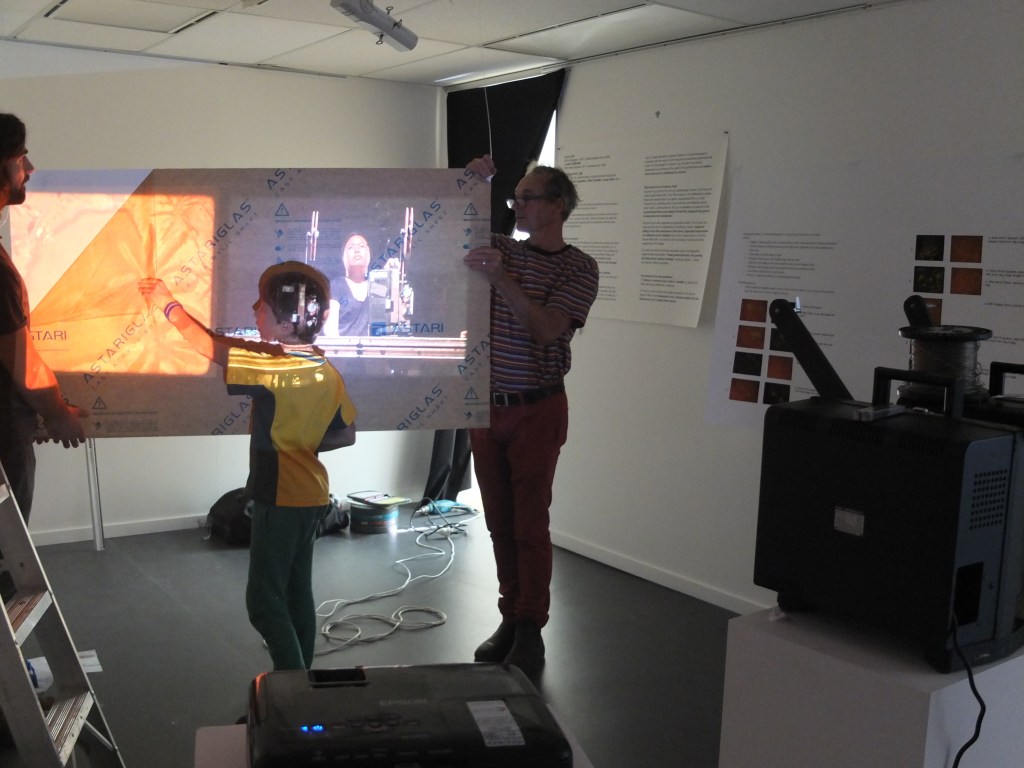
    Bolter and Grusin at work – Ellen captures the event for later remediation when she will maybe stick it in a different spot altogether, although she will probably tie it back to this event. Baby Freya is intrigued by John Porter. What you can see on Ellen’s screen is my standing over the projectors and you can vaguely see the super 8 projections on the back wall.

    I used old work for this event – Blue Mountains positive (2005) and Two Screen NowNow also made late 2005. I enjoyed very much seeing the NowNow work. It is quite tightly structured as a two screen work and has all the techniques I had perfected up to this time. It’s quite dense with colour and image. The quest I went on after 2008 was to try to use as little image as possible. There are sections in the Two Screen NowNow that do this (sections of sticky tape on paper for example) and the thick sections where the film travels very slowly over the sprockets. The image that is the AO portrait (right) is part of this work of mine to get very minimal with the image – the colour is water colour and acrylic residue, it’s very subtle, there is no loud bold colour like this NowNow work.

    image

    Psithurism and onlooker: Rhys Butler (left), Tony Martin-Jones (centre left), John Butler (centre right), Richard Johnson (right).

    The Psithurism performance works well with this material. It’s hard for me to listen and look at the same time but I’d like to hear and see more of this work with the trio of saxophones using mostly extended techniques who are one of Canberra’s best kept secrets.

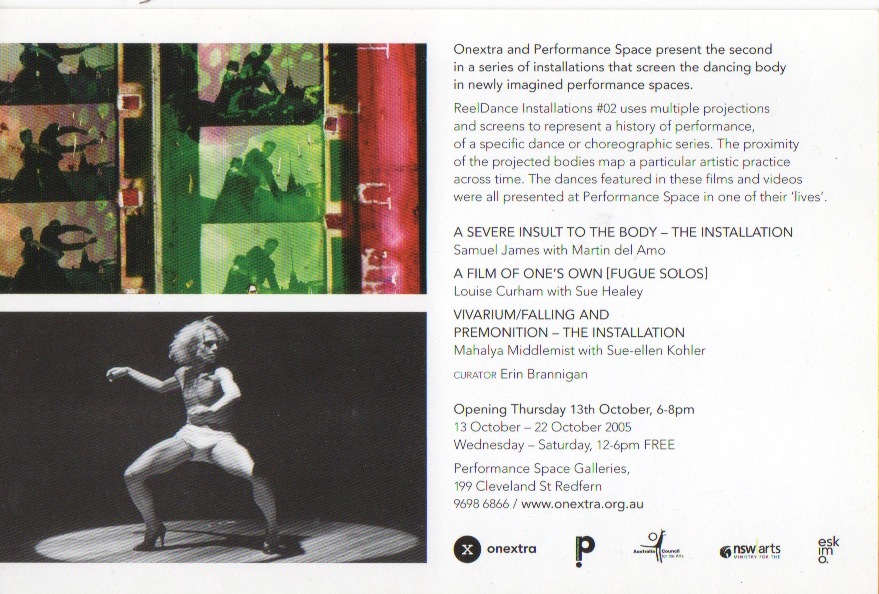
    A Film of One’s Own [Fugue Solos] (2005)

    Curham, L (creator). A Film of One’s Own [Fugue Solos] (2006), solo exhibition at Nga Taonga Sound and Vision, Wellington, 24 Feb – 18 Mar.

    Screening at Nga Taonga Sound & Vision, 2006.

    2005: in ‘Reel Dance installations’, The Performance Space, videos by four artists, 13 -22 Oct.

    2006: solo exhibition at Te Manawa Art, Palmerston North, NZ 29 Sep – 3 Nov.

  • Herbaceous

    Herbaceous

    Curham, L. 2003. Herbaceous – a super 8 garden for the 21st century. NZ Film Archive, Auckland, NZ 13 Aug to 8 Oct 2003.

    Curham, L. 2004. Ivan Dougherty Gallery, group show ‘Masters of COFA’, College of Fine Arts, UNSW.